Every building has unique heating demands. We match your application requirements with the right boiler technology to deliver the best balance of efficiency, reliability, and cost.
Select your facility type below for tailored product recommendations, sizing guidance, and case studies from similar installations.
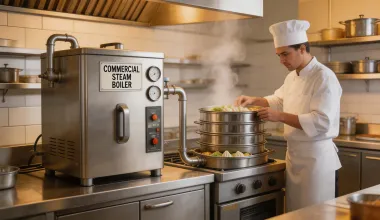
Steam and hot water solutions for cooking, pasteurization, CIP systems, and process heating. HACCP-compatible designs with stainless steel heat exchangers and precise temperature control down to +/-1 degree Celsius.
Discuss Your Facility →
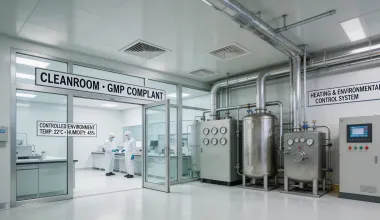
Clean steam generators and GMP-compliant heating systems for pharmaceutical production. Stainless steel components, validated documentation, and redundant backup configurations for continuous operation.
Get Technical Guidance →
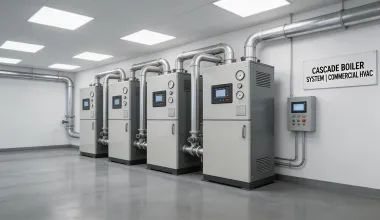
Cascade boiler systems for offices, hotels, hospitals, and campuses. Weather-compensated controls adapt output to demand. Based on metered data from VaillantHeat commercial installations in Germany and the UK (2021-2024), cascade configurations with weather compensation reduce gas consumption by 15-30% compared to fixed-output single-boiler systems of equivalent capacity.
Request a Site Survey →
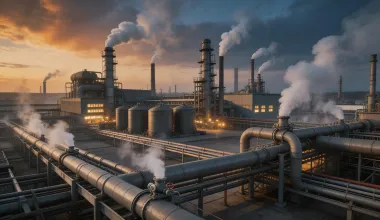
High-capacity steam and thermal fluid heating for chemical, textile, paper, and plastics manufacturing. Fire-tube and water-tube boilers rated up to 25 bar with dual-fuel burner flexibility.
Speak to an Engineer →
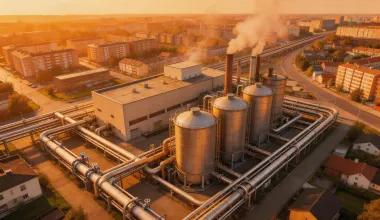
Large-scale hot water generators and heat pump combinations feeding district heating networks. Modular plant designs allowing phased capacity expansion as developments grow.
Explore District Solutions →
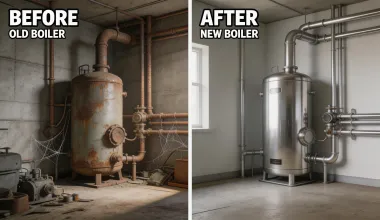
Upgrading from atmospheric to condensing boilers typically saves 15-25% on fuel costs, according to measured before-and-after consumption data from VaillantHeat retrofit projects across commercial and industrial sites. We manage the complete retrofit scope including flue modifications, controls migration, and minimal-downtime changeover.
Get a Retrofit Assessment →Choosing the right heating system involves balancing efficiency, upfront cost, fuel availability, and environmental impact. Below are two of the most common decision points our engineers help clients navigate.
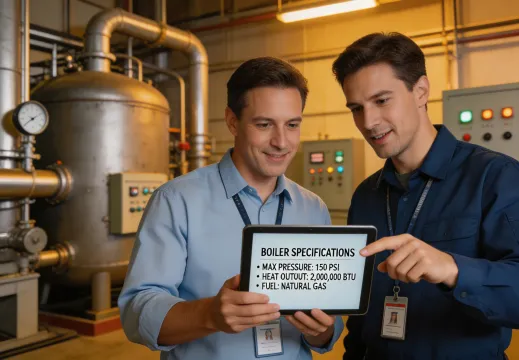
The transition from fossil-fuel boilers to heat pumps is accelerating across Europe, driven by the EU F-Gas Regulation and national decarbonization targets. However, the right choice depends on building-specific factors, and neither technology is universally superior.
Case for Gas Condensing Boilers: Lower upfront cost (typically 40-60% less than equivalent heat pump installations), compatible with existing high-temperature radiator systems (flow temperatures above 55 degrees Celsius), proven reliability in poorly insulated older buildings, and faster installation timelines. Gas condensing boilers achieve 92-98% gross thermal efficiency and remain the pragmatic choice where building fabric upgrades are not feasible.
Case for Heat Pumps: Air-source heat pumps using R-290 (propane) refrigerant deliver COP values of 3.5-5.2, meaning they produce 3.5-5.2 kW of heat per 1 kW of electricity consumed. Over a 15-20 year lifecycle, heat pumps typically yield lower total operating costs in well-insulated buildings with underfloor heating. They eliminate on-site combustion emissions and align with tightening carbon regulations.
Key limitation: Heat pump performance degrades at ambient temperatures below -10 degrees Celsius, and retrofit projects in older buildings often require expensive insulation upgrades and radiator replacements to accommodate lower flow temperatures. Hybrid systems combining a heat pump with a gas boiler backup are emerging as a pragmatic middle path.
For large commercial and mixed-use developments, architects and engineers must decide between a single centralized boiler plant and multiple distributed boiler units. Both approaches have legitimate engineering justifications.
Case for Centralized Plant: Higher aggregate efficiency through optimized load sharing, easier maintenance access in a dedicated plant room, better integration with heat recovery and thermal storage systems, and simpler BMS connectivity. A 2,000 kW centralized cascade with 4 x 500 kW condensing boilers can achieve part-load efficiencies of 96-98% through intelligent sequencing.
Case for Distributed Units: Lower initial piping and distribution costs, built-in redundancy (failure of one unit does not affect other zones), easier phased installation aligned with construction schedules, and reduced heat losses from shorter pipe runs. Distributed systems are often preferred in campus-style developments where buildings are completed in stages.
Key limitation: Centralized plants require substantial plant room space and careful hydraulic design to avoid flow imbalances. Distributed units increase the total number of maintenance touchpoints and may complicate energy monitoring across the estate. The breakeven point typically favors centralized systems above 1,500 kW total demand.
Our Boiler Selection Guide walks you through the key questions: What is your peak thermal demand? What fuel supply is available? Do you need steam or hot water? What are your emission constraints?
Answer a few questions and our engineers will shortlist the most suitable options for your facility within 48 hours.
Start the Selection Guide
Our application engineers are available to discuss your project requirements and recommend the best-fit configuration.
Request a Consultation